Keep your commercial fridge holding temperature, and cut the power bill too
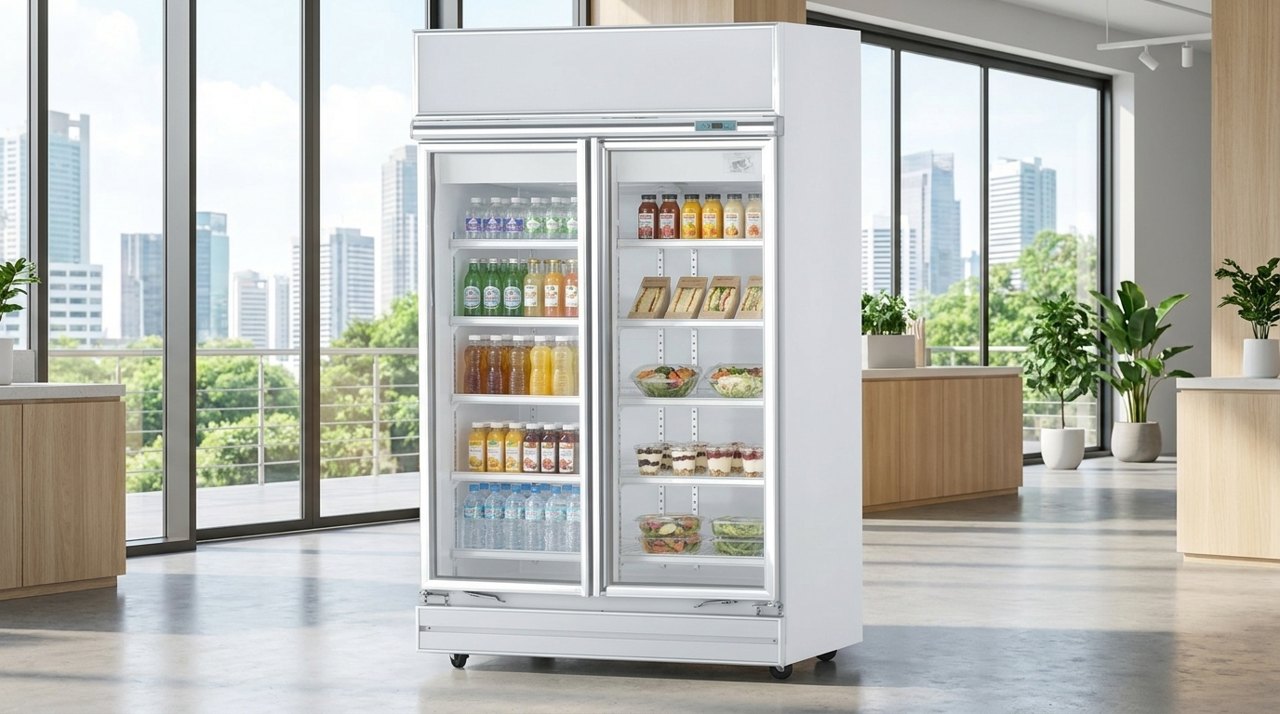
Your fridge has one real job: hold a safe, steady temperature for the food inside, 24 hours a day, through Singapore’s heat and humidity. When it does that job well, two good things follow, your food stays safe and your power bill drops.
The same habits that keep temperature stable also keep running costs down, because a fridge that is sealing, breathing and holding temperature properly does not have to fight itself all day. Most of these fixes are free. Here is where to start.
Free habits that keep temperature stable
- Set the right temperature, not colder than you need. Every degree colder than necessary adds to the bill. A chiller at +2°C to +4°C and a freezer at −18°C suit most stock. Going colder “to be safe” just burns power. Check the real temperature with a thermometer, not the dial.
- Keep the doors closed. Every opening lets warm, humid air in, and the compressor has to pull it back down. Train staff to plan trips, take everything out at once, and never prop doors open during a busy service.
- Check the door gaskets. The rubber seals wear out first. A cracked or slack gasket leaks cold continuously. Quick test: close the door on a sheet of paper. If it slides out easily, the seal needs replacing.
- Clean the condenser coils. The condenser sheds heat. Clogged with dust and kitchen grease, it cannot, so the compressor runs longer and hotter. Brush or vacuum the coils at least monthly, this is one of the biggest savings owners ignore.
- Give it room to breathe. A commercial fridge needs clearance to ventilate. Boxed in tight, or sat next to an oven or in direct sun, it fights a losing battle. Leave the recommended gap and keep it away from heat sources.
- Let hot food cool first. Putting hot pots straight in dumps heat the compressor must then remove, and warms nearby stock. Cool food down first, within safe food-handling time limits, then refrigerate.
- Do not overload it. Stock jammed against internal vents stops cold air circulating, creating warm spots and making the unit work harder. Leave airflow space inside.
- Keep up with defrost and servicing. Ice build-up on freezer walls acts like insulation in reverse, it makes the unit work harder. Stay on top of defrost cycles and book regular servicing.
The biggest factor: the fridge itself
Habits help, but the single largest factor is the compressor inside. An older on/off compressor runs flat out, stops, then slams on again, and the temperature swings up and down with every cycle. 3-stage TOROL inverter technology modulates its output to match demand, so the temperature stays flat and steady, which is exactly what protects your food. TOROL’s inverter models hold that steadier curve and, as a bonus, use up to around 40% less energy than an ordinary chiller, year after year.
If your current unit is ageing, replacing it is often cheaper than it looks: every TOROL model is pre-approved for Singapore’s Energy Efficiency Grant (EEG), which can co-fund a large share of an energy-efficient replacement.
Start with the free habits this week, set your temperatures correctly, clean the coils, check the seals. Then, when it is time to replace, choose a unit built to hold temperature reliably from day one.
Thinking about a more efficient fridge?
Tell us your space and we will recommend an EEG pre-approved TOROL model that fits.