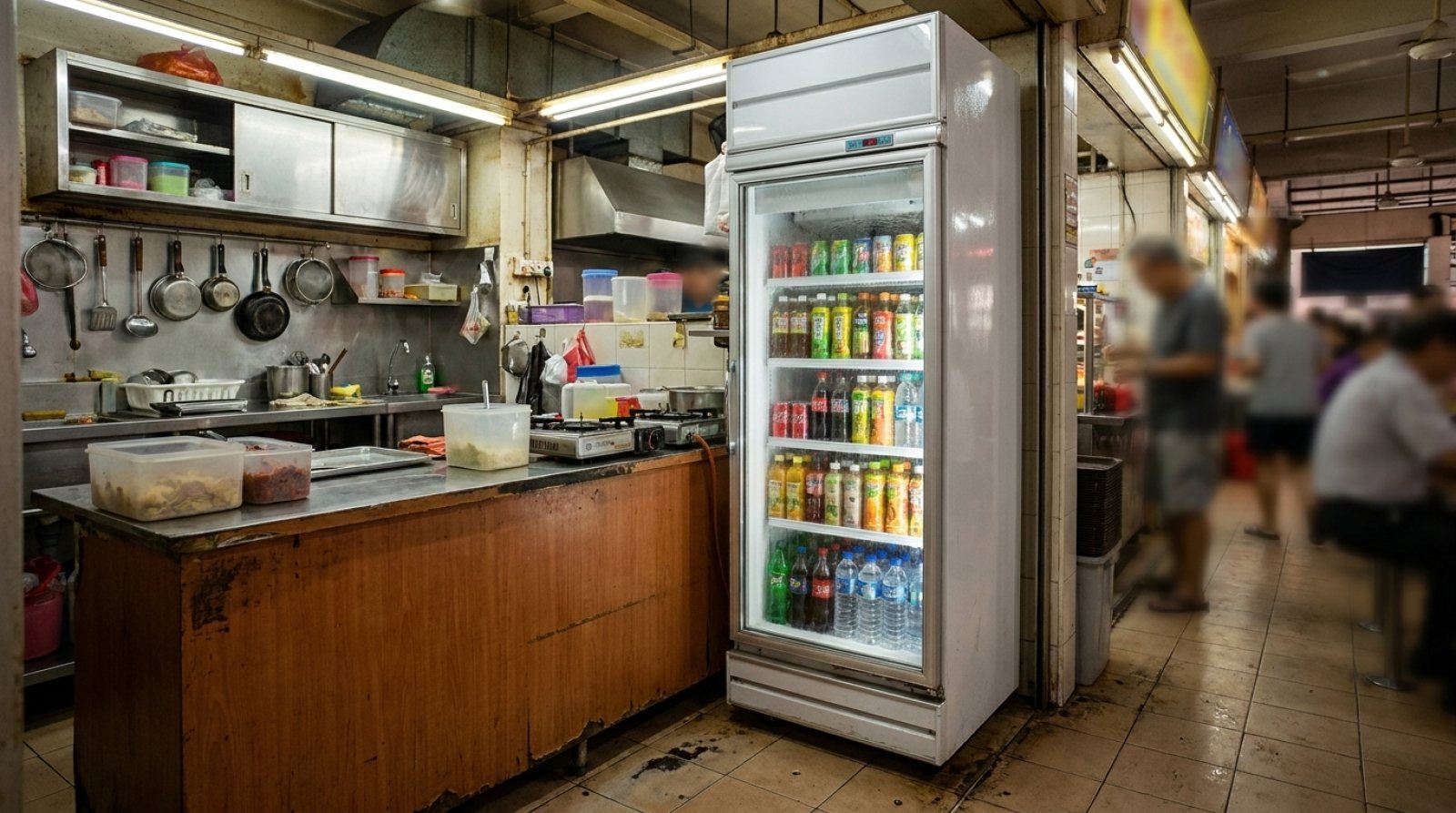
A second-hand fridge looks like a saving. But the real question is not the price, it is whether it can hold a safe, steady temperature for the food you put inside. On a used unit, that is exactly what you cannot trust.
What to check, and why it matters for your food
Every item on this list is really a temperature question. If any of these is failing, the unit cannot keep food fresh.
- Listen to the compressor. A unit that rattles, knocks or struggles is near the end of its life, and a failing compressor cannot hold temperature when the kitchen gets hot.
- Test that it holds temperature. Switch it on with a thermometer inside. Getting cold once is not enough, it has to hold a steady temperature for hours. A used unit often cannot.
- Inspect the door seals. Cracked or slack gaskets let warm, humid air in, so the temperature drifts and the unit struggles to recover. A leaking seal is a direct freshness risk.
- Look for rust and worn surfaces. Rust spreads, and pitted or damaged interior surfaces are hard to keep clean and hygienic, the opposite of what food-contact surfaces should be.
- Ask about age and history. A fridge already 7 or 8 years old has little reliable life left, and no record of how hard it was run.
The risk a used price tag hides
A cheap upfront price is only part of the story. The bigger risk is the day the unit drifts out of temperature and you lose a fridge full of stock, or worse, serve food that was not held safely. There is usually no warranty, so the first breakdown is your bill, and parts for older or unbranded models can be slow or impossible to find, which means longer downtime while your food sits at risk.
The fair comparison
Put the used unit next to a new one over five years: the purchase price, the repairs, and above all the risk of a breakdown taking out your stock or putting your freshness in doubt. Seen that way, the “expensive” new fridge is often the safer and cheaper one. A new TOROL also comes with a full warranty and a Singapore service team, and it is pre-approved for the Energy Efficiency Grant, which can co-fund a large share of the cost.
Weighing up a used fridge?
Before you gamble on a second-hand unit, let us quote you a new EEG pre-approved TOROL that holds temperature you can trust.